Yellow patches in a lawn are not a single problem with a single solution. They’re a symptom with at least seven distinct causes, and applying the wrong fix can make the underlying problem worse. Iron-deficient yellowing looks similar to dog urine yellowing on first inspection, but the treatments are opposite.
This guide walks through how to diagnose what’s actually causing yellow patches in your lawn, then what to do about each one.
Start with the pattern
Before treating anything, look at the shape and distribution of the yellow patches. The pattern almost always reveals the cause.
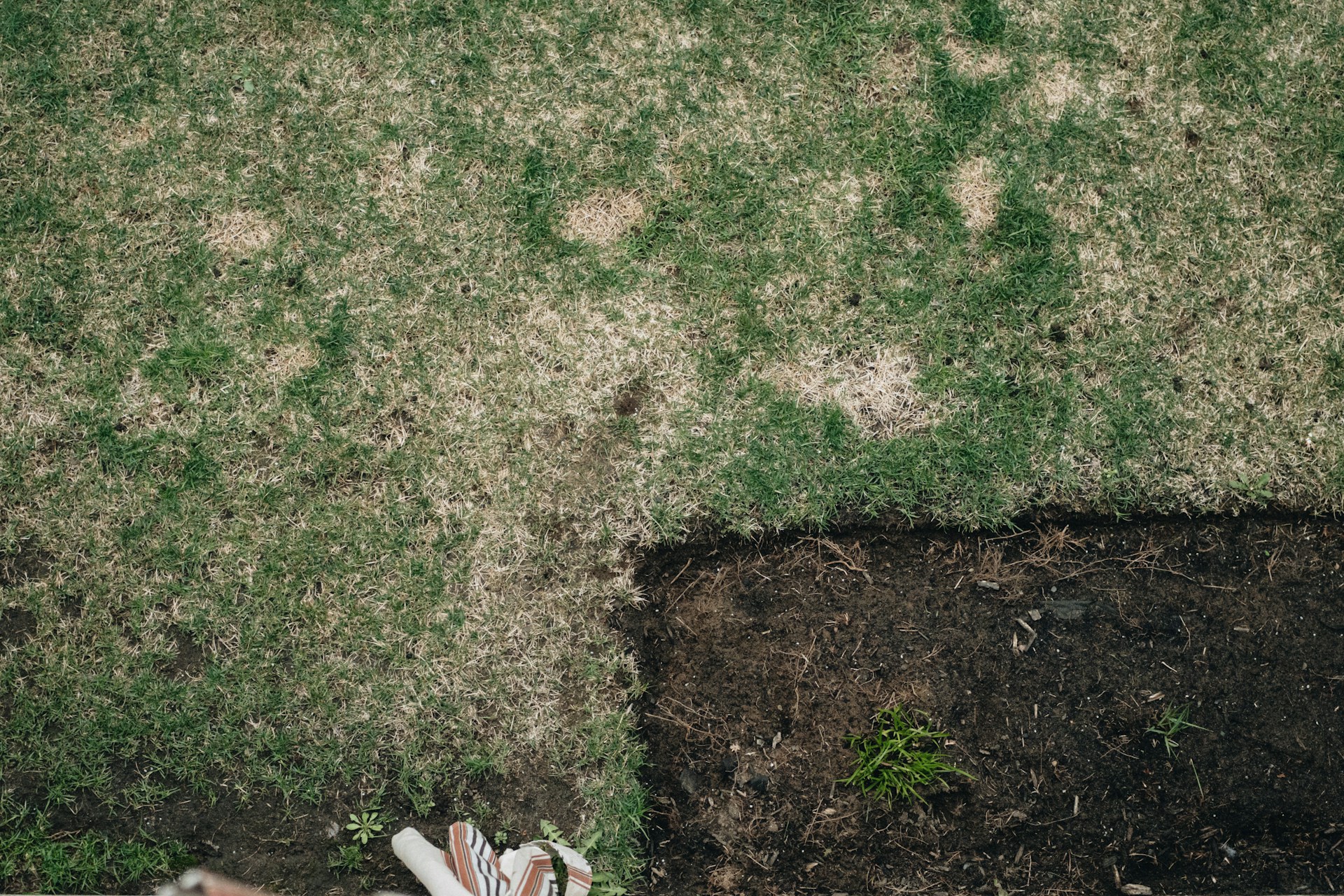
Round, well-defined circles (10-30cm diameter) with healthy green grass between them. Almost always dog urine. Often with a vivid green ring of stimulated growth around the dead centre.
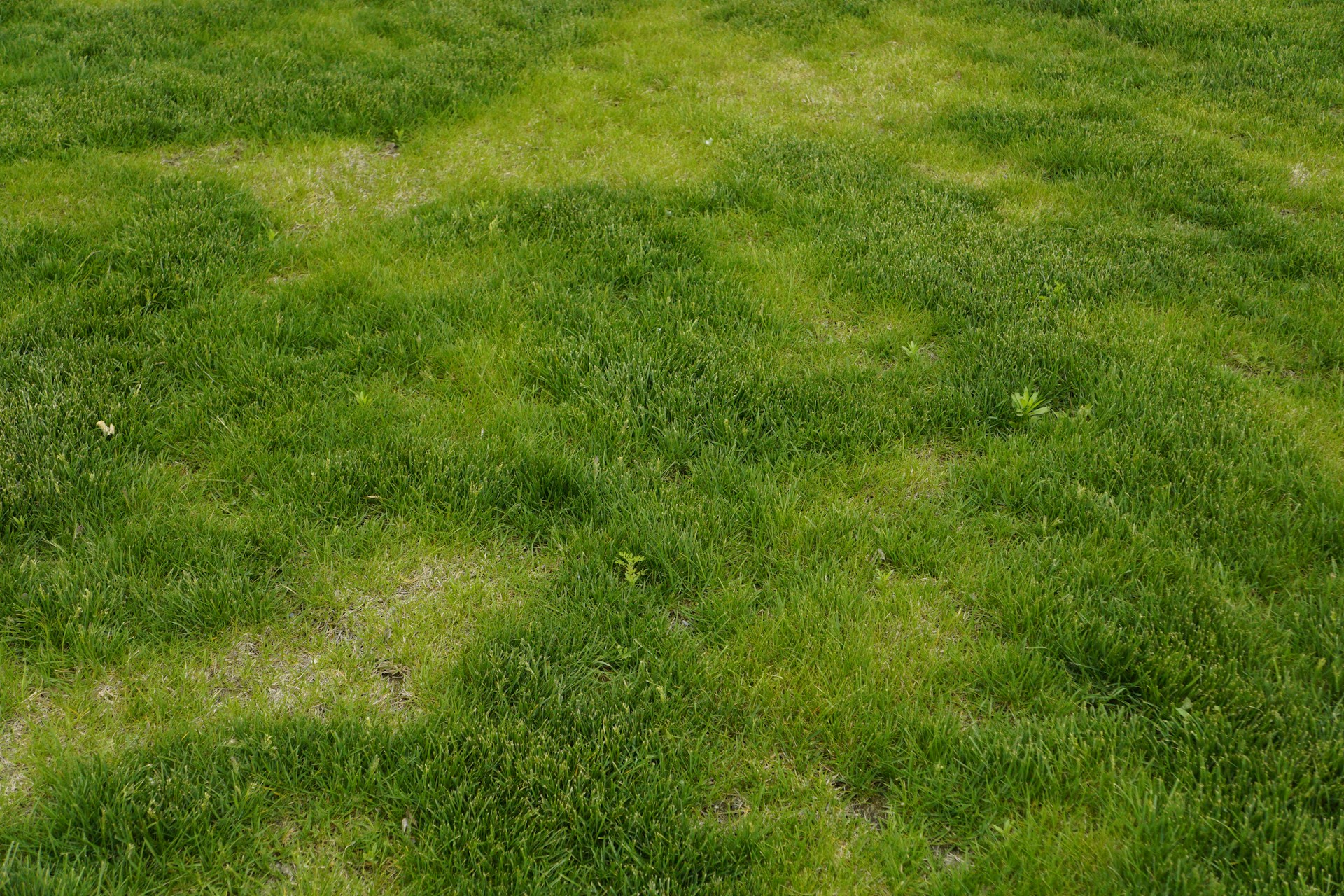
Larger irregular yellow areas, gradually fading from yellow to green at the edges. Usually nutrient deficiency, dry soil, or compaction.
Yellowing along distinct lines or stripes. Mower problem. Either uneven blades, fertiliser spreader overlap, or a leaking spreader.
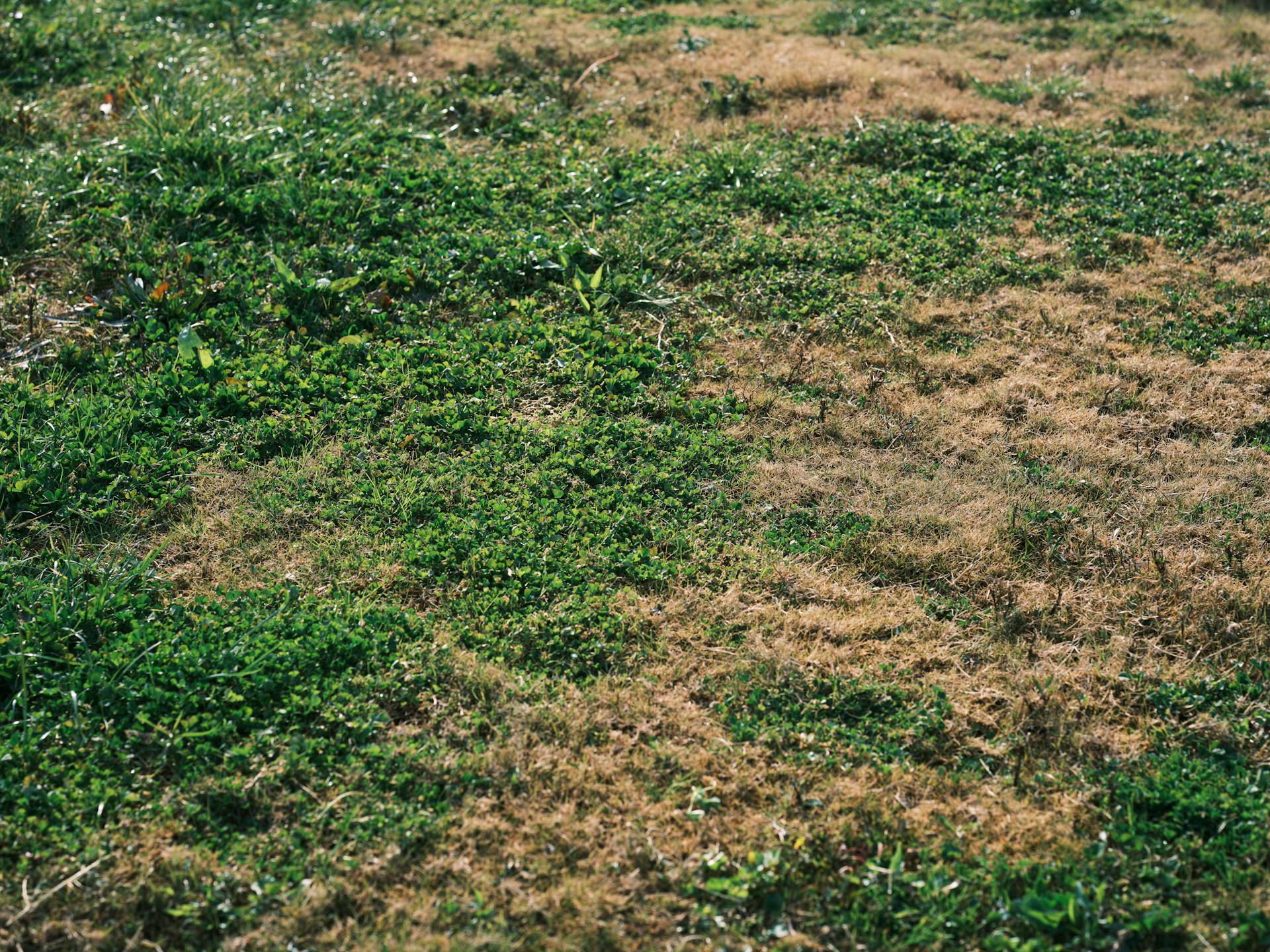
Yellow patches that appear after very hot weather. Drought stress. The lawn isn’t dead, just dormant.
Yellow grass with visible insect activity, birds digging, or grass that lifts easily like a carpet. Grub damage. Leatherjackets or chafer grubs.
Yellowing around tree bases or fence lines. Root competition or shade-related stress.
Generally yellowed lawn rather than patches. Whole-lawn problem — usually nitrogen deficiency, iron deficiency, or sulfur deficiency.
If you can match your lawn’s pattern to one of these descriptions confidently, skip to the relevant section below. If not, work through them in order.
Cause 1: Dog urine
By a significant margin, the most common cause of yellow patches in UK family lawns. Dog urine is high in nitrogen and salts. Small amounts fertilise grass; concentrated patches burn it.
Diagnosis: Round patches, 10-30cm wide, often with a darker green ring around the burned centre. New patches appear in different locations over time as the dog uses different spots.
Fix: Water the affected spot immediately after the dog urinates if you can — dilution prevents the burn. For existing patches, water heavily for several days to flush the salts, then reseed once the soil is no longer salty (typically 2-3 weeks).
Some products marketed as preventing dog urine damage (added to the dog’s food or water) work by changing urine pH and concentration. Their effectiveness is mixed and they can have unintended health effects. The simplest fix is training the dog to use one specific area you don’t mind sacrificing.
Cause 2: Nitrogen deficiency
Nitrogen is the nutrient grass uses most. A nitrogen-deficient lawn yellows uniformly across larger areas, with growth slowing and overall vigour declining.
Diagnosis: Larger irregular yellowing, often across most of the lawn rather than discrete patches. Growth is slow even in good weather. The lawn responds dramatically to fertiliser application, going noticeably greener within 7-10 days.
Fix: Apply a nitrogen-rich lawn feed appropriate to the season. In spring and summer, a balanced lawn feed (high N, lower P and K) works well — Westland SafeLawn, Aftercut All In One, or MOOWY Spring Boost are reliable UK options. In autumn, switch to a lower-nitrogen autumn feed which prioritises root development.
We’ve covered fertiliser selection in detail in our best lawn feed for UK gardens guide.
Cause 3: Iron deficiency
Less common than nitrogen deficiency but distinctive. Iron-deficient grass yellows while remaining green-veined — a pattern called interveinal chlorosis.
Diagnosis: Yellowing affects the spaces between leaf veins while veins themselves stay green. Often appears on alkaline soils (pH above 7), sandy soils, or after heavy applications of phosphorus.
Fix: Iron sulphate, applied as a foliar spray or watered-in treatment, greens grass within days. Many UK lawn feed products include iron specifically to address this. Don’t over-apply — iron stains paving permanently.
Cause 4: Drought stress
UK summers increasingly include drought periods. Grass responds to water shortage by going dormant, which presents as yellowing or browning, but the grass isn’t dead — it’s protecting itself.
Diagnosis: Yellowing during or just after a dry spell, especially in exposed areas, on slopes, or over shallow soil. The grass crowns (the white base of each blade) are still alive when examined closely. Grass on adjacent shaded or moisture-retaining areas remains green.
Fix: Don’t try to revive a drought-dormant lawn with light watering — it encourages shallow roots and makes the problem worse next time. Either water deeply (25mm of water in one session, weekly) or wait for rainfall to bring the lawn back. Most UK lawns recover fully within 10-14 days of returning rainfall.
Cause 5: Mower damage
Yellow stripes or patterns that align with mowing direction indicate a mower problem.
Diagnosis: Stripes of yellow grass running parallel to your mowing direction. Sometimes one wheel-track is yellower than the other.
Causes and fixes:
- Blunt blades: A dull mower tears grass instead of cutting it, causing the leaf tip to brown and yellow. Sharpen or replace blades annually for petrol mowers, every 2-3 years for cordless used at moderate volume.
- Cut too short: Scalping leaves yellowing across the cut zone. Raise mower height to at least 25mm.
- Uneven mower wheels or chassis: One side cutting shorter than the other. Check wheel heights match.
- Spilled fertiliser from a leaking spreader: Linear yellow streaks. Apply to the rest of the lawn for visual consistency, then fix the spreader.
Cause 6: Grub damage (leatherjackets, chafer grubs)
Lawn pest damage is more common than UK gardeners realise. Leatherjackets (crane fly larvae) and chafer grubs both eat grass roots, killing patches that then yellow and die.
Diagnosis: Yellow patches that pull up easily, exposing soil with visible white or grey C-shaped grubs. Increased bird activity (crows, magpies, starlings repeatedly digging) is a strong signal. Most damage is visible from late summer through autumn.
Fix: Biological control with parasitic nematodes is the only effective home treatment in the UK since most chemical options were banned. Nematodes are applied as a soil drench in autumn (for chafer grubs) or August-September (for leatherjackets). Products like Nemasys and BASF Nemasys are widely available online.
Reseeding affected areas comes after the grubs are dead. We’ve covered overseeding bare patches in our bare patches in lawn guide.
Cause 7: Compaction or shallow soil
Areas of lawn over compacted soil or shallow topsoil yellow first under stress because grass roots can’t reach moisture or nutrients.
Diagnosis: Yellowing concentrated in high-traffic areas (paths worn into the lawn, areas where children play, where bins sit) or over known shallow-soil areas (over old hardcore, near building foundations).
Fix: Aerate the affected area with a hollow-tine fork. Top-dress with sandy lawn dressing to gradually improve soil depth and structure. For severely shallow areas, consider lifting the turf, adding 5-10cm of topsoil, and relaying or reseeding. This is a renovation-level intervention covered in our complete UK lawn renovation guide.
What to do if you genuinely can’t tell
Some yellowing is genuinely ambiguous. If you’ve worked through the diagnostic patterns and aren’t sure, two things help.
The water test. Pour 5 litres of water on a yellow patch. Come back in 30 minutes. If the soil has absorbed it readily, you’re not looking at compaction. If water sits on the surface or runs off, compaction is likely. Repeat in different patches for comparison with healthy areas.
The pull test. Try to lift a section of yellow grass. Healthy grass resists strongly. Drought-dormant grass resists moderately. Grub-damaged grass lifts cleanly like a carpet. Dead grass disintegrates.
When in doubt, a soil test kit (around £15) tells you about pH and major nutrient levels. The combination of soil knowledge and pattern observation almost always identifies the cause.
What we’d skip
A few yellow-patch treatments that often appear in UK lawn content but rarely earn their place:
“Universal lawn cure” products. No product addresses all seven causes. The marketing implies otherwise.
Heavy nitrogen feed on a yellow lawn without diagnosis. If the cause is drought, compaction, grubs, or salt damage, more nitrogen makes things worse, not better.
Resorting to returfing for yellow patches. Yellow patches almost always represent treatable conditions. Replacing turf doesn’t address why the lawn yellowed in the first place.
The yellow-patch question is fundamentally a diagnostic question. Spend 20 minutes properly identifying the cause and the fix usually becomes obvious. Skip the diagnosis and you’ll be treating symptoms forever.