Bare patches in a lawn are not a single problem. They’re the visible result of one of seven distinct causes, and the correct repair depends on which one. Reseeding a bare patch caused by compaction without first addressing the compaction means the new grass dies in the same spot within months.
This guide walks through identifying what caused each patch in your lawn, then the correct repair method for each cause.
Diagnose before you repair
Before sowing any seed, identify why each bare patch exists. The patch’s location and shape almost always reveals the cause.
Patches in high-traffic areas (paths worn into the lawn, the route from back door to shed, where the children play). Wear damage. Soil is usually compacted underneath. Reseeding without aerating the soil first will fail.
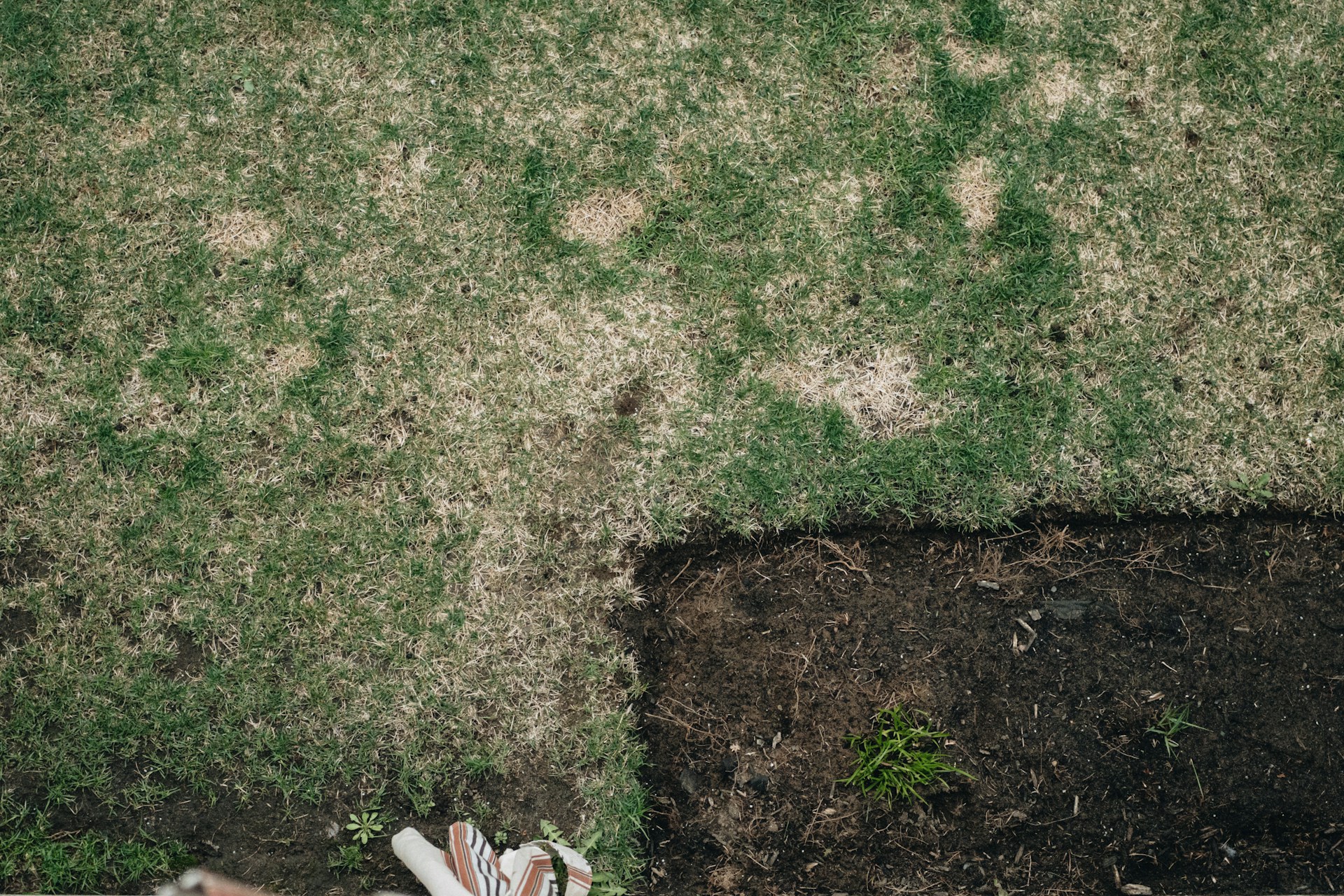
Round patches with darker green grass around them. Dog urine. Salt-burned soil that needs flushing before reseeding.
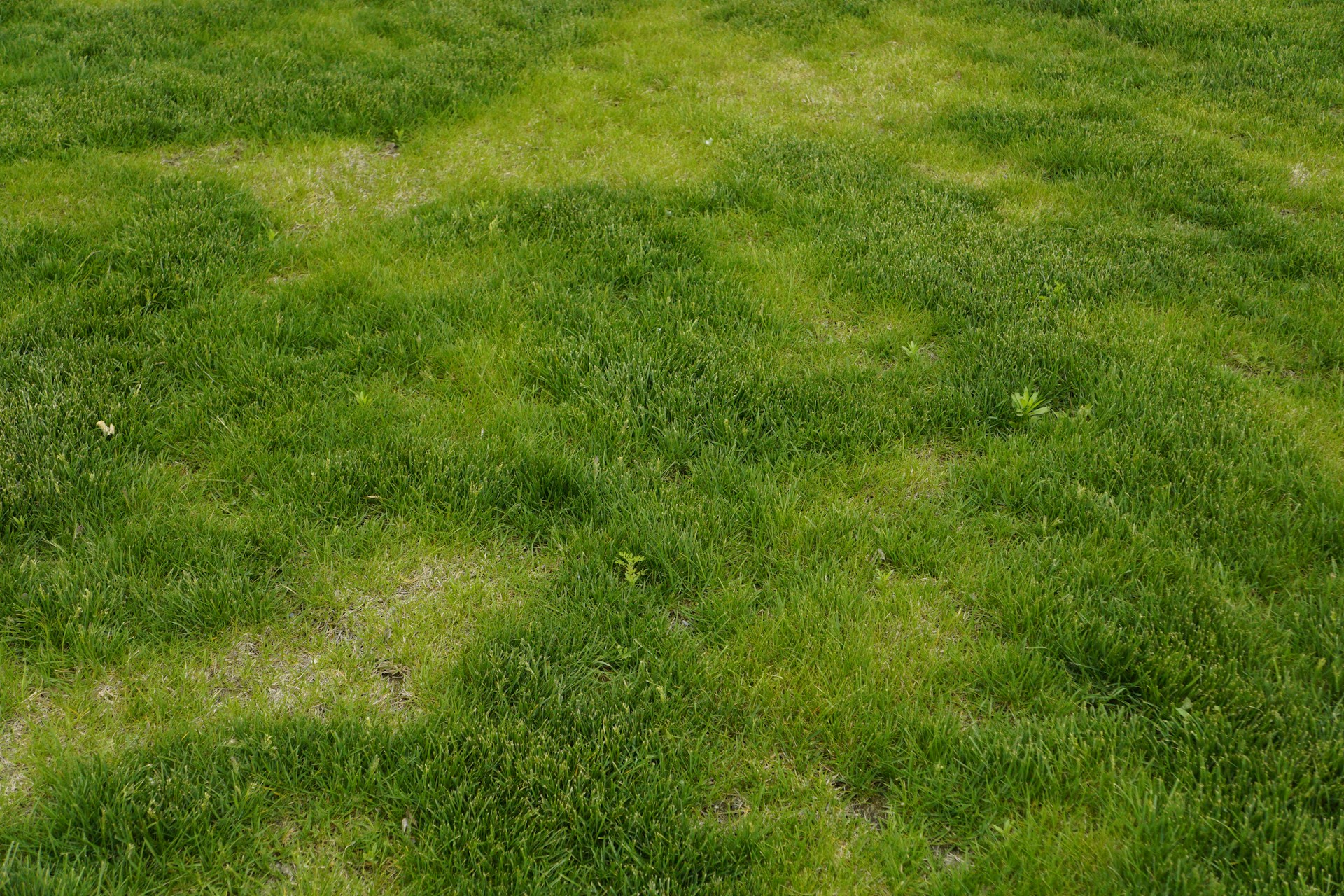
Irregular patches that appeared after a hot dry summer. Drought damage. The grass died, exposing soil. Underlying soil is usually fine; just reseed.
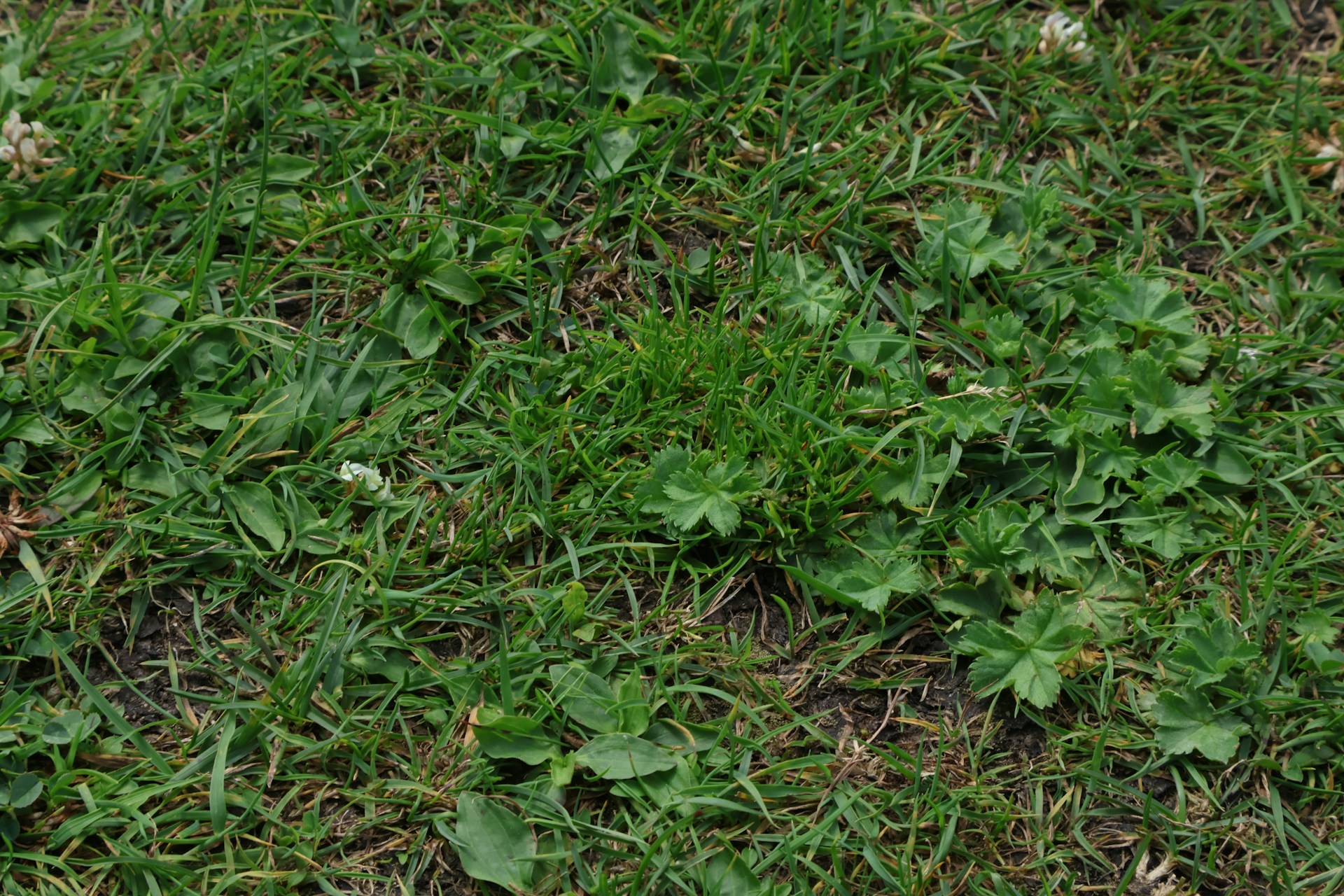
Patches under or near trees. Shade and root competition. Reseeding with regular grass mix will fail. Either use a shade mix, accept thinner growth, or replace with non-grass planting.
Patches that appeared after applying products (fertiliser, weedkiller, moss killer). Chemical burn or product application error. Soil may need flushing before reseeding.
Patches with visible insect activity, easy lifting of dead grass, or persistent bird digging. Grub damage from leatherjackets or chafer grubs. Treat the pest before reseeding or new grass will be eaten too.
Patches where the lawn meets driveways, paving, or building foundations. Often shallow soil, heat reflection, or chemical contamination. Reseeding may need additional topsoil or a soil amendment first.
If you can’t identify the cause confidently, work through the wear and dog urine sections first — they account for around 70% of UK domestic bare patches.
Wear damage repair
Wear damage is the most common cause of bare patches in family lawns. The grass has died because soil compaction has prevented root growth and water absorption, plus the abrasion of repeated foot traffic.
Step 1: Address compaction. A garden fork pushed into the soil to its full depth at 10cm intervals across the patch and adjacent areas creates space for roots and water. Wiggle the fork to widen the holes slightly. For larger compacted areas, a hollow-tine fork (which pulls plugs of soil out) is more effective.
Step 2: Improve soil structure if needed. If the soil is heavy clay or visibly compacted, mix a sandy lawn dressing with the surface soil. Rake it into the top 2-3cm. This gradually improves drainage and root penetration.
Step 3: Reseed. Use a hard-wearing seed mix with high perennial ryegrass content for fast establishment and traffic tolerance. Sowing rate 35-50g per square metre on the patch. Rake lightly to settle into surface contact, water gently, keep moist for 14-21 days.
Step 4: Reduce traffic during establishment. New grass needs 6-8 weeks before it can handle normal foot traffic. If the patch is on a regular walking route, redirect traffic temporarily — a stepping stone path through the lawn often becomes the long-term solution.
For detail on seed selection, see our best lawn seed for UK gardens guide.
Dog urine damage repair
Dog urine creates a distinctive pattern: round patches with a dead centre and a vivid green ring around the edge. The salts and concentrated nitrogen in dog urine burn grass at high concentrations while fertilising it at lower concentrations, hence the ring effect.
Step 1: Flush the soil thoroughly. Water the patch heavily for several days — more than you’d think necessary. The aim is to dilute and wash out the residual salts. Around 20-30 litres per square metre across 3-4 days does the job.
Step 2: Test before reseeding. After flushing, the soil should feel and smell normal. If you can still smell ammonia or notice a salty crust, flush more.
Step 3: Lightly rake the dead grass off the surface. Don’t dig deep — just remove the dead matter to expose soil for seed contact.
Step 4: Reseed. Standard family lawn mix at 35-50g per square metre. Water gently, keep moist for the germination period.
Step 5: Prevent recurrence. Train the dog to a designated area you don’t mind sacrificing, water immediately after the dog urinates if you can catch it, or use one of the various “dog urine neutralising” lawn products marketed in the UK. The latter have mixed effectiveness.
Drought damage repair
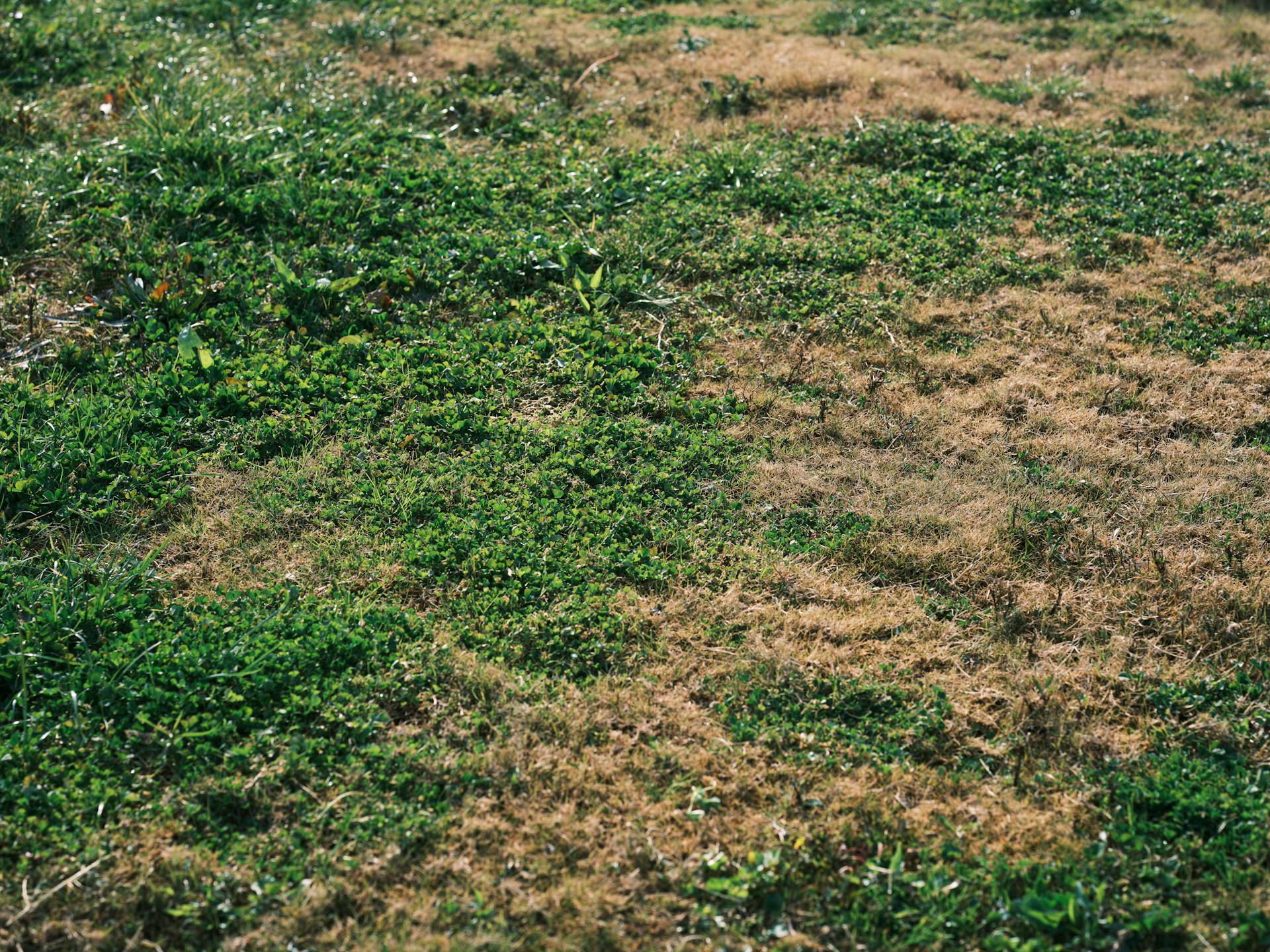
Drought damage looks alarming but the underlying soil is usually undamaged. The grass died from water stress, exposing patches that need reseeding.
Step 1: Confirm the grass is genuinely dead. Drought-dormant grass and drought-killed grass look identical. Wait for return of rainfall and 2-3 weeks of cool weather. If the patches haven’t recovered, they’re dead.
Step 2: Light surface preparation. Rake out the dead grass to expose soil. The soil itself usually doesn’t need much intervention.
Step 3: Reseed. Standard mix appropriate to your lawn use. Sowing rate 30-50g per square metre.
Step 4: Establish before next dry period. Time the repair for autumn or early spring when reliable rainfall handles the watering load. Reseeding in summer requires committed daily watering for several weeks and often fails anyway.
Shade damage repair
Bare patches under trees or shaded by buildings are not really a “repair” problem — they’re an environmental problem. Standard grass needs 4-6 hours of direct sunlight; under deep shade no amount of seeding produces a dense lawn.
Three realistic options:
Use a dedicated shade seed mix. UK options like Johnsons Shady Place perform meaningfully better than standard mixes in moderate shade (3-4 hours of indirect light). They won’t produce dense growth in deep shade, but they’ll produce thinner maintained grass rather than failure.
Accept thinner growth and stop trying to force density. Allow the area to be visibly less dense than the rest of the lawn. Mow at slightly higher height to support what grass does grow.
Replace with non-grass planting. For deep shade, ferns, hostas, ivy, or shade-tolerant ground cover plants produce a better-looking result with much less maintenance than struggling grass.
The mistake to avoid is repeatedly reseeding the same shade patch with standard mix every year, watching it fail every year, and concluding the seed is bad. Light is the limiting factor.
Chemical burn repair
Bare patches that appeared after applying fertiliser, weedkiller, or moss killer indicate over-application or uneven application.
Step 1: Flush thoroughly. Heavy watering for 3-5 days dilutes residual chemicals. The amount needed depends on what was applied — a fertiliser burn flushes faster than a weedkiller residue.
Step 2: Wait the appropriate interval. Selective lawn weedkillers say to wait 4-6 weeks before reseeding because residues can prevent germination. Fertiliser burns can be reseeded sooner — usually 2-3 weeks after thorough flushing. Read the original product label for specific waiting periods.
Step 3: Reseed with appropriate mix. Standard family lawn or renovation mix. Light rake, water gently, monitor germination — if seed fails to germinate, residual chemical is still present and you need to wait longer.
Step 4: Adjust application practices. Spreading fertiliser by hand is the most common cause of burns. Use a calibrated spreader and walk at consistent speed. For chemical applications, use a clean dedicated sprayer rather than the bottle the product came in.
Grub damage repair
Bare patches caused by leatherjacket or chafer grub damage have a distinctive feature: the dead grass lifts easily, exposing white or grey C-shaped grubs in the soil.
Step 1: Treat the grubs first. Reseeding without addressing the pest means new grass roots get eaten too. The only effective home treatment in the UK is parasitic nematodes (Nemasys is the main brand) applied as a soil drench. Timing matters — nematodes work in autumn (September) for chafer grubs, late summer (August-September) for leatherjackets.
Step 2: Wait before reseeding. Allow 4-6 weeks after nematode application for the grub population to be eliminated.
Step 3: Standard repair from there. Light surface preparation, reseed with appropriate mix, water and maintain through establishment.
For diagnosis of grub damage, see our yellow patches in lawn guide which covers grub identification in detail.
Edge and foundation repair
Bare patches along driveways, paths, and building foundations have specific challenges: shallow soil, heat reflection, possible chemical contamination from concrete or asphalt.
Step 1: Assess soil depth. Push a screwdriver or thin probe into the soil. Less than 5cm of topsoil before hitting hardcore or subsoil means the patch will struggle regardless of seeding approach.
Step 2: Add topsoil if needed. Top up to at least 10cm of topsoil. Lawn topsoil from a UK supplier (Westland, Verve, or local supplier) is typically £4-7 per 25kg bag for the small quantities needed.
Step 3: Reseed. Standard mix, sowing rate 35-50g per square metre.
Step 4: Water more diligently than for other patches. Edge locations dry faster than open lawn. Daily light watering during establishment, plus through the first hot week after establishment.
When patches keep returning
If you’ve reseeded a patch and it’s bare again within 6-12 months, the underlying cause wasn’t addressed. The hierarchy of likely culprits:
- Compaction not fully resolved
- Underlying soil problem (depth, drainage, contamination)
- Continuing wear in the same pattern
- Pest population not eliminated
- Shade not addressed
- Standing water in the area after rain
Diagnose properly before reseeding again. Repeated failed reseeding wastes money and the soil structure of the patch.
What we’d skip
A few bare-patch repair approaches that often appear in UK lawn content but rarely earn their place:
Patch repair “magic” products at premium prices. Westland Aftercut Patch Repair and similar combined seed-soil-fertiliser products are convenient for one or two small patches. For multiple patches, buying components separately is dramatically cheaper per square metre.
Returfing small bare patches. New turf laid into existing lawn often shows a colour and texture difference for 1-2 years. Reseeding produces a more invisible repair, just slower.
Skipping cause identification. Bare patches caused by different problems need different repairs. The temptation to “just throw some seed down” produces inconsistent results.
Repairing patches in summer drought. Successful repair requires reliable moisture for 3-4 weeks. UK summer drought conditions usually mean repair fails, money wasted, and you do it again in autumn anyway. Wait for autumn or spring.
The right repair for the right cause produces patches that disappear within a season. The wrong repair produces patches that come back annually.