A new lawn from seed costs roughly a quarter of the price of turf and produces a stronger, healthier lawn in the long run. The catch is timing. Seed sown in the wrong week can sit on cold soil for a month doing nothing, or get scorched by an unexpectedly dry fortnight in May. Turf is forgiving in a way seed isn’t.
But forgiving costs money. For most British gardens, the right approach is seed — sown at the right time, into properly prepared soil, with a clear plan for the first six weeks.
Here’s how to do it properly.
When to sow
Two windows work in the UK climate. Both are narrower than people assume.
Mid-March to late April is the spring window. Soil temperature needs to be at least 8°C consistently — sow before this and the seed sits dormant, often eaten by birds or rotted by a wet snap. Soil thermometers are useful here; if you haven’t got one, the practical rule is to wait until weeds are actively growing in nearby borders. If the weeds are off, the seed will germinate.
Late August to mid-October is the autumn window, and it’s the better one. Soil is still warm from summer, autumn rain is reliable, and weed competition is lower than in spring. New grass establishes roots through October and November ready for a strong spring. Most experienced gardeners and groundsmen seed in autumn for this reason.
Sowing in summer is possible but harder. You’ll fight drought, and the seed needs daily watering for three weeks straight. Skip July and early August unless you’ve got a hose timer and patience.
Sowing in winter is wasted seed. Don’t.
Preparing the ground
Soil preparation is where most lawn-from-seed projects fail. People underestimate how much work this takes. For a 100sqm lawn, plan a full weekend on ground prep alone.
The sequence:
1. Clear what’s there. If you’re starting from scratch on bare ground after building work, you can skip this. If you’re replacing an existing lawn, you’ll need to kill or remove it first. Glyphosate (Roundup) is the most efficient route — apply on a dry day, wait two weeks for everything to die back, then remove. Mechanical removal with a turf cutter is faster but harder work and shifts soil structure less helpfully.
2. Dig over the top six inches. A rotavator hire from HSS Hire or Speedy Hire is worth the £40 for the day if your lawn is bigger than 50sqm. For smaller areas, a fork works. The aim is to break up compacted soil and mix in air. If you find a hard pan (a compacted layer about a foot down, common in newly built houses), you’ll need to break through it or you’ll have drainage problems forever.
3. Improve the soil if needed. If you’ve got heavy clay, fork through 2-3 inches of horticultural sand and a generous amount of compost or well-rotted manure. If you’ve got sand or chalk, fork through 3-4 inches of compost to add water retention. Most British soils benefit from added organic matter regardless.
4. Rake the surface level. This is the time-consuming bit. You’re looking for a fine, even tilth — broken-up soil with no large clods, no stones bigger than your thumbnail, no dips or bumps. Walk over it in flat shoes, find the low spots, rake material from high spots into them. Then walk over the whole area heel-to-toe (“foot-firming”) to consolidate the surface without compacting it.
5. Leave it for two weeks if you can. This lets weed seeds in the soil germinate, which you then hoe off before sowing your grass seed. It’s the difference between a clean new lawn and one fighting weeds from week one. If you’ve got time, do this step.
Choosing the seed
Two real choices to make.
Hard-wearing or fine ornamental? Hard-wearing mixes (typically 70% perennial ryegrass with fescue) are what you want for family lawns, pet runs, anything that gets walked on. Ornamental mixes (fine fescue with bent grass, low ryegrass content) look beautiful but bruise under footfall and need more attention. For most UK households, hard-wearing is the right answer.
Shade tolerance. If your lawn area gets less than 5-6 hours of direct sunlight, look specifically for a shade-tolerant mix. These contain higher proportions of fine-leaved fescues that cope with lower light. Standard mixes thin out badly under trees.
We’ve covered specific brand recommendations in our guide to the best lawn seed in the UK. The Grass People’s Premium Family Lawn Seed is our usual default for new lawns from seed; it germinates reliably and the establishment rate is consistently good.
Sowing rate matters: 35g per square metre is right for most mixes. Less and you’ll get a thin, patchy lawn. More and the seedlings compete with each other and weaken.
Sowing
Pick a still day. Even light wind makes even distribution difficult, and patchy seeding produces a patchy lawn.
The technique: divide your seed in half. Walk the lawn area in straight lines spreading half. Then walk perpendicular to the first direction spreading the second half. This cross-pattern produces more even coverage than trying to get it right in one pass.
For lawns over 50sqm, a hand-cranked spreader (£15-25 from any garden centre) saves time and produces more even results than hand-broadcasting. For smaller lawns, hand-broadcasting is fine.
Once sown, rake the surface lightly. You’re aiming to get the seed into contact with soil — about a third of seeds should still be visible, the rest just below the surface. Don’t bury the seed deep; it won’t germinate from more than 5mm down.
Finally, walk the area gently to firm the seed into the soil. Use a roller if you have one. Otherwise, flat-soled shoes and patience.
The first six weeks
This is when new lawns succeed or fail. Three things matter.
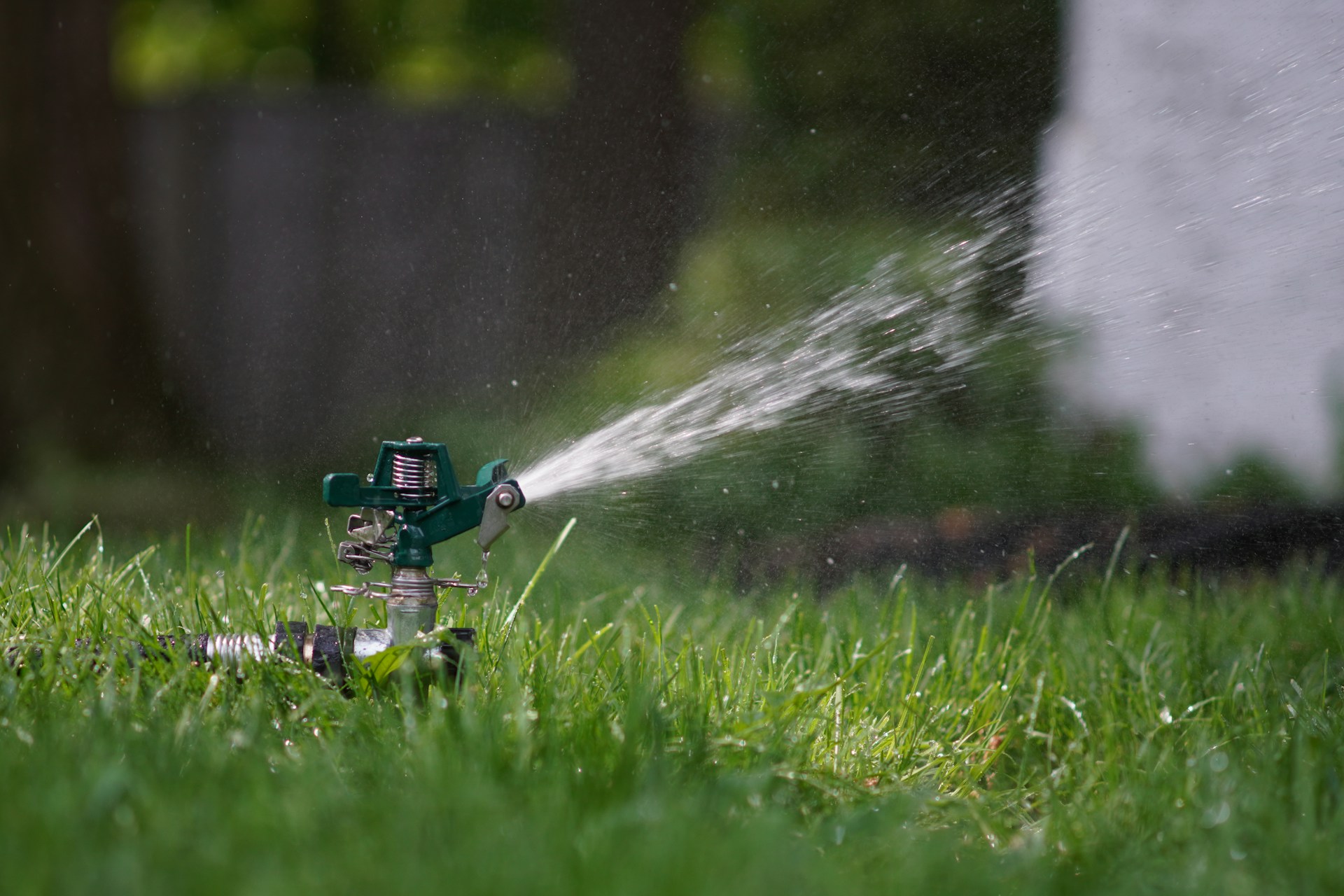
Water. New seed needs daily watering for the first 2-3 weeks unless rain does the job. Not soaking — the top inch of soil needs to stay moist, not waterlogged. A light sprinkler for 15 minutes morning and evening is usually right. After 3 weeks, scale back to every other day as roots develop. After 5 weeks, normal watering rhythm.
Birds. Pigeons and crows love new lawn seed. Cover the area with horticultural fleece or fine netting on stakes for the first 2 weeks if your area has bird pressure. Black cotton thread stretched across the surface at ankle height also helps. The seed manufacturers’ “bird repellent coating” is marketing — it doesn’t reliably work.
Patience. First germination shows in 7-14 days depending on temperature and seed mix. Don’t walk on it until the grass is 5cm tall, usually around 4-5 weeks. The first cut should be at 6-7 weeks with a sharp blade set to maximum height, just taking the tops off. Aim for 5cm grass height, no shorter.
After the first cut, gradually reduce mowing height over the next 3-4 cuts until you’re at your normal lawn height. Don’t try to bring it down fast.
Common things that go wrong
Patchy germination across the lawn. Usually inconsistent sowing rate. If patches are noticeably thin after week 4, overseed those areas with the same mix at 25g/sqm and water in.
Damping off (seedlings collapse at the soil line). A fungal problem in cool, wet conditions. Improve airflow if possible, reduce watering frequency (but increase depth), and accept some loss.
Moss appearing early. Indicates poor drainage or too much shade. Worth addressing now while the lawn is young rather than fighting it for years. Our moss in lawn UK guide covers the underlying causes.
Yellow patches in patches. Often dog urine if you have one, or fertiliser scorch if you accidentally applied feed before the lawn was established. New lawns shouldn’t be fed for the first 8-10 weeks — they have everything they need from soil reserves.
What it costs
For a typical 100sqm UK garden, costs break down roughly:
- Seed: £25-35 (good quality mix at 35g/sqm)
- Topsoil/compost amendment: £30-80 depending on existing soil
- Spreader hire or purchase: £15-25
- Glyphosate if killing existing lawn: £15-20
- Rotavator hire if needed: £40-60
- Watering: bills increase by £15-25 for the first 6 weeks
Total: £150-250 for a properly prepared new lawn from seed.
For comparison, the same area in turf would cost £600-900 plus delivery. The seeded lawn takes longer to establish but produces a stronger, more weed-resistant, more disease-resistant lawn that will outlast a turfed one by years.
Why bother with seed at all?
Three reasons people choose turf instead — and counter-arguments worth considering before you do.
“Instant lawn.” True — turf is walkable in 3-4 weeks rather than 8-10. But turf takes 6-12 months to root deeply, in which time you’re managing it carefully anyway. The instant gratification is mostly visual.
“Less hassle.” Also true for the first six weeks. After that, seeded lawns are actually less work because they’ve developed deeper roots and stronger weed resistance from day one.
“Less risk.” This is the real one. Seed can fail if you mistime it or if a freak weather event hits in week 2. Turf will establish almost regardless. If you’re seeding for the first time and feeling uncertain, autumn is the lower-risk window — soil is warm, rain is reliable, and weed competition is minimal.
For most situations, seed wins on cost, long-term lawn quality, and satisfaction. Turf wins on speed and certainty. Choose accordingly.
If you’re renovating an existing lawn rather than starting fresh, our UK lawn renovation guide covers the overseeding approach, which sits between full reseeding and turf laying.